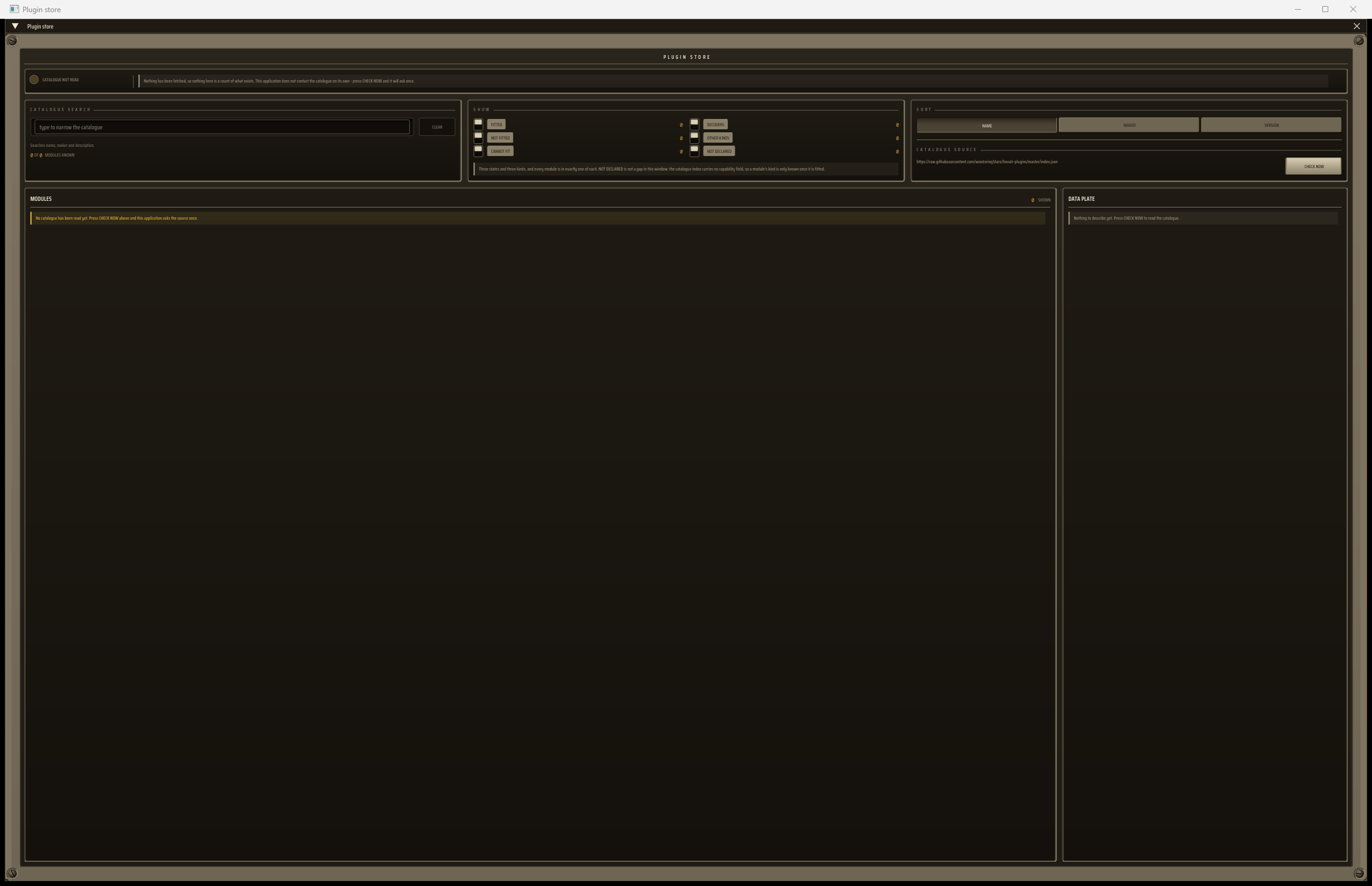
Fifteen plugins are published today, and eight more are
built and waiting on a catalogue update — those eight are marked as such rather than counted
among the fifteen. Each entry says exactly how well it is verified, because “decodes AIS” and
“decodes AIS off the air” are different claims.
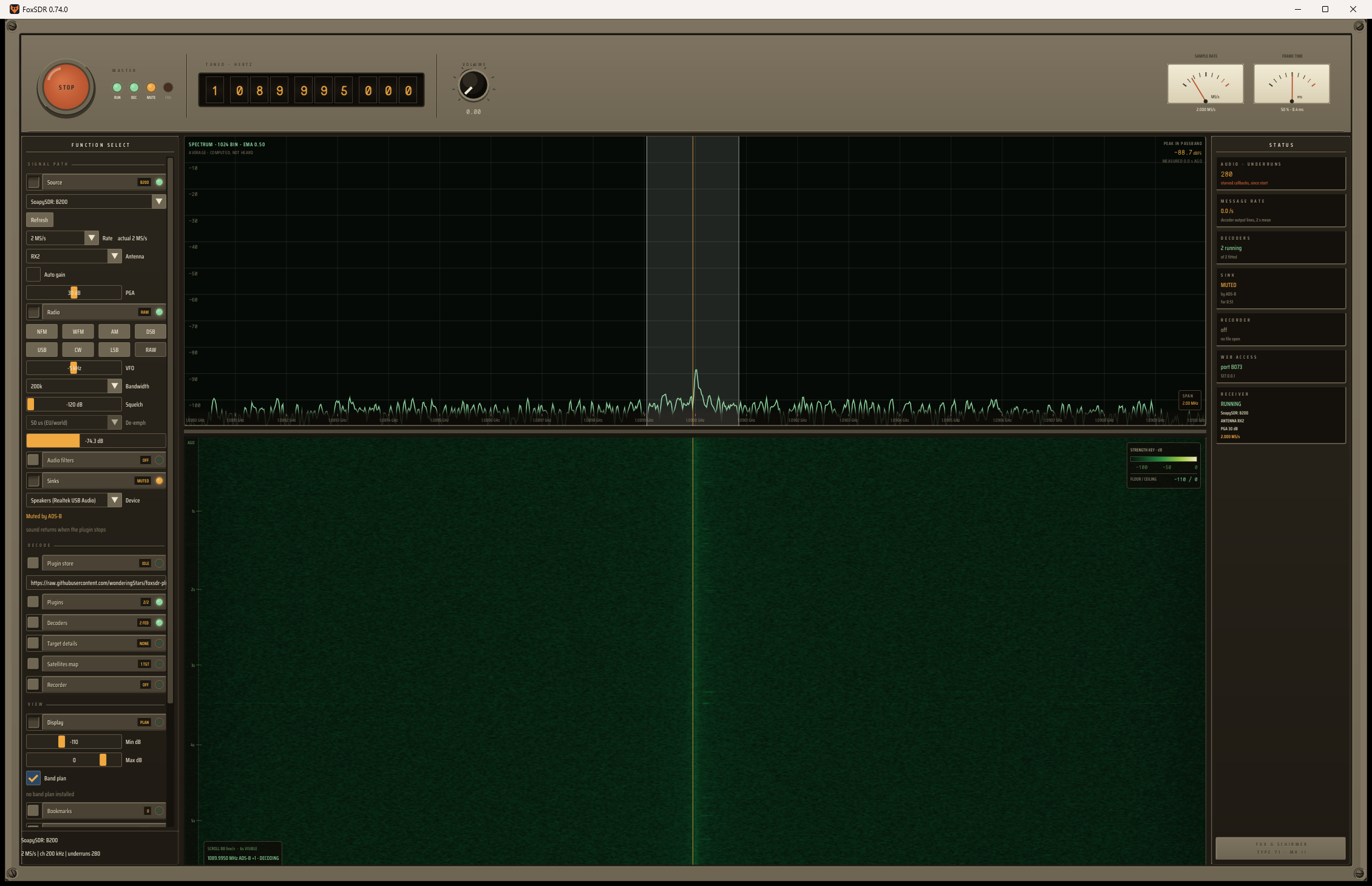
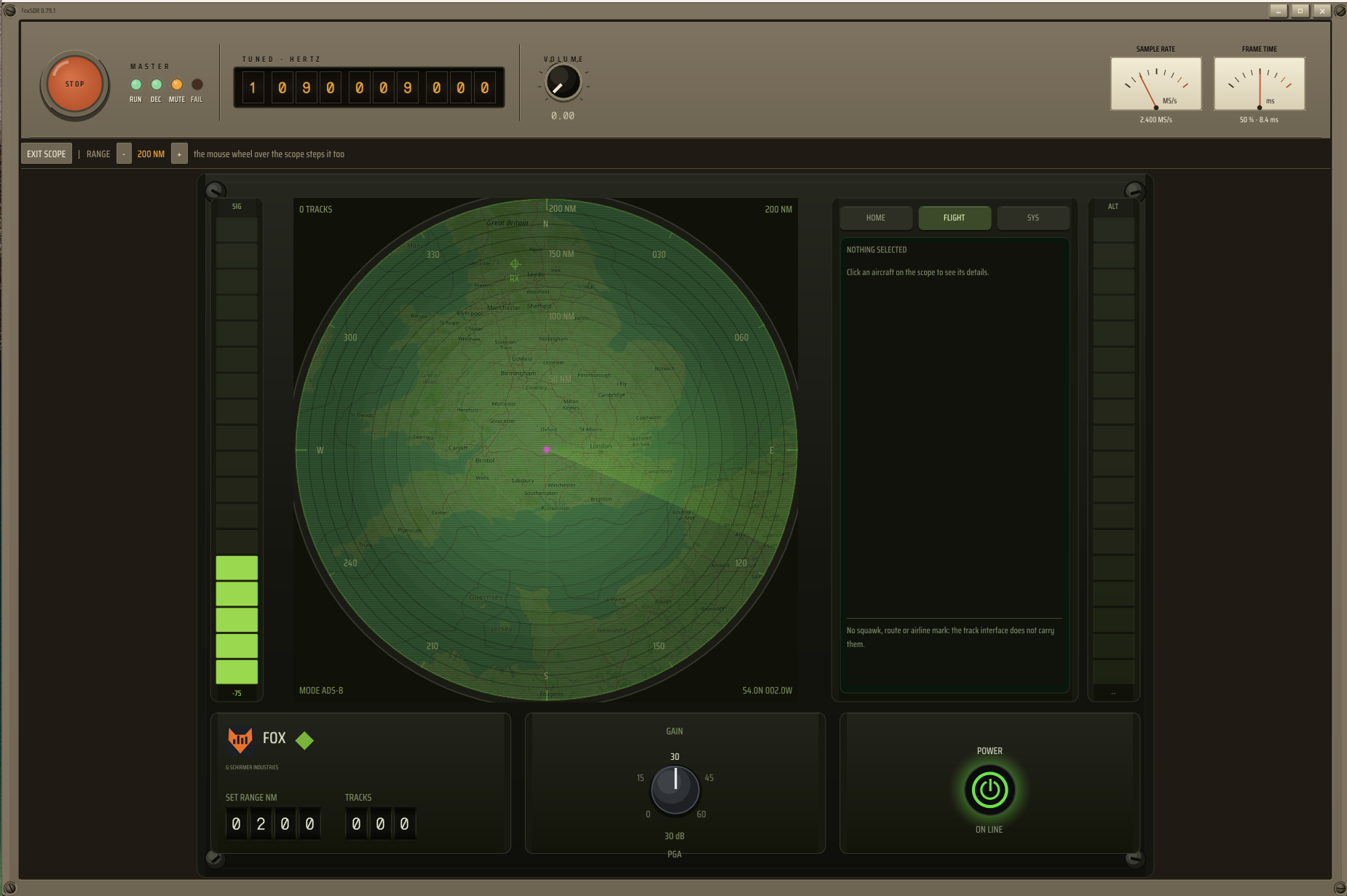
ADS-B Aircraft Decoder
I/Q decoderverified off air
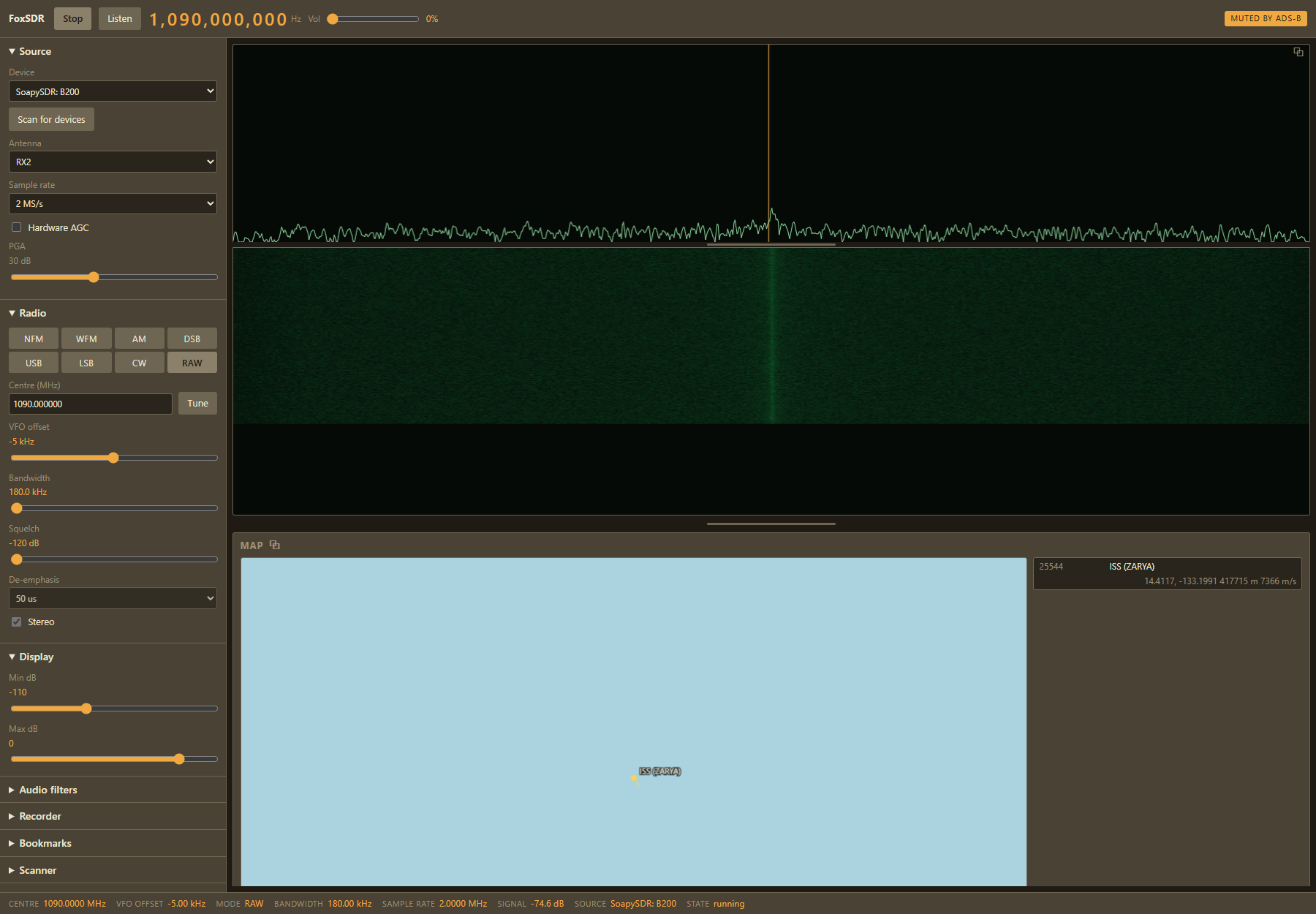
Aircraft position, callsign and velocity at 1090 MHz. Decoded live off the air, with ICAO address blocks and callsigns agreeing across independent message types. The receiver's own DC offset is removed before detection, so a zero-IF dongle hears aircraft it used to bury.
Aircraft Info (registry lookup)
Map enrichment
Turns a 24-bit aircraft address into who it actually is: registration, type, operator and country, shown on the map and in the track list.
AIS Ship Tracking Decoder
I/Q decodertested, not yet off air
Ship positions and voyage data on the marine band. Both channels at once from one receiver, plotted with everything else on the map.
APRS / AX.25 Packet Decoder
Audio decodertested, not yet off air
Bell 202 packet radio from 144.800 MHz NFM audio: positions, messages, status and telemetry, validated against the AX.25 frame check.
SSTV Image Decoder
Image decodertested, not yet off air
Slow-scan pictures on HF and 2 m. The mode is read from the transmission's own VIS header, and clock drift is measured from the sync pulses, corrected, and reported in ppm.
NOAA Weather Pictures (APT)
Image decoder
The picture the NOAA satellites broadcast continuously on 137 MHz, built line by line as one crosses the sky. Both channels arrive side by side as sent — usually visible light beside infrared. Fitted alongside Satellites, that plugin says when NOAA 19 is next overhead and this one draws what it sends.
Morse (CW) Decoder
Audio decodertested, not yet off air
Finds the tone, works the speed out from the signal itself, follows an operator who changes pace, and reports the words per minute it settled on.
RTTY Teleprinter Decoder
Audio decodertested, not yet off air
45.45 baud amateur radioteletype on HF. Polarity is worked out from the signal rather than asked for, and both character sets are handled.
POCSAG Pager Decoder
Audio decodertested, not yet off air
All three bit rates and inverted polarity detected automatically. The BCH error-correcting code is implemented in full: damaged codewords are discarded rather than shown as text.
EAS / SAME Alert Decoder
Audio decoder
The digital headers carried by every US Emergency Alert System message and NOAA Weather Radio alert, printed in words: the event, who issued it, which counties it covers and how long it is valid for. The header is sent three times and this votes on the copies, so an alert survives noise that damages each one differently.
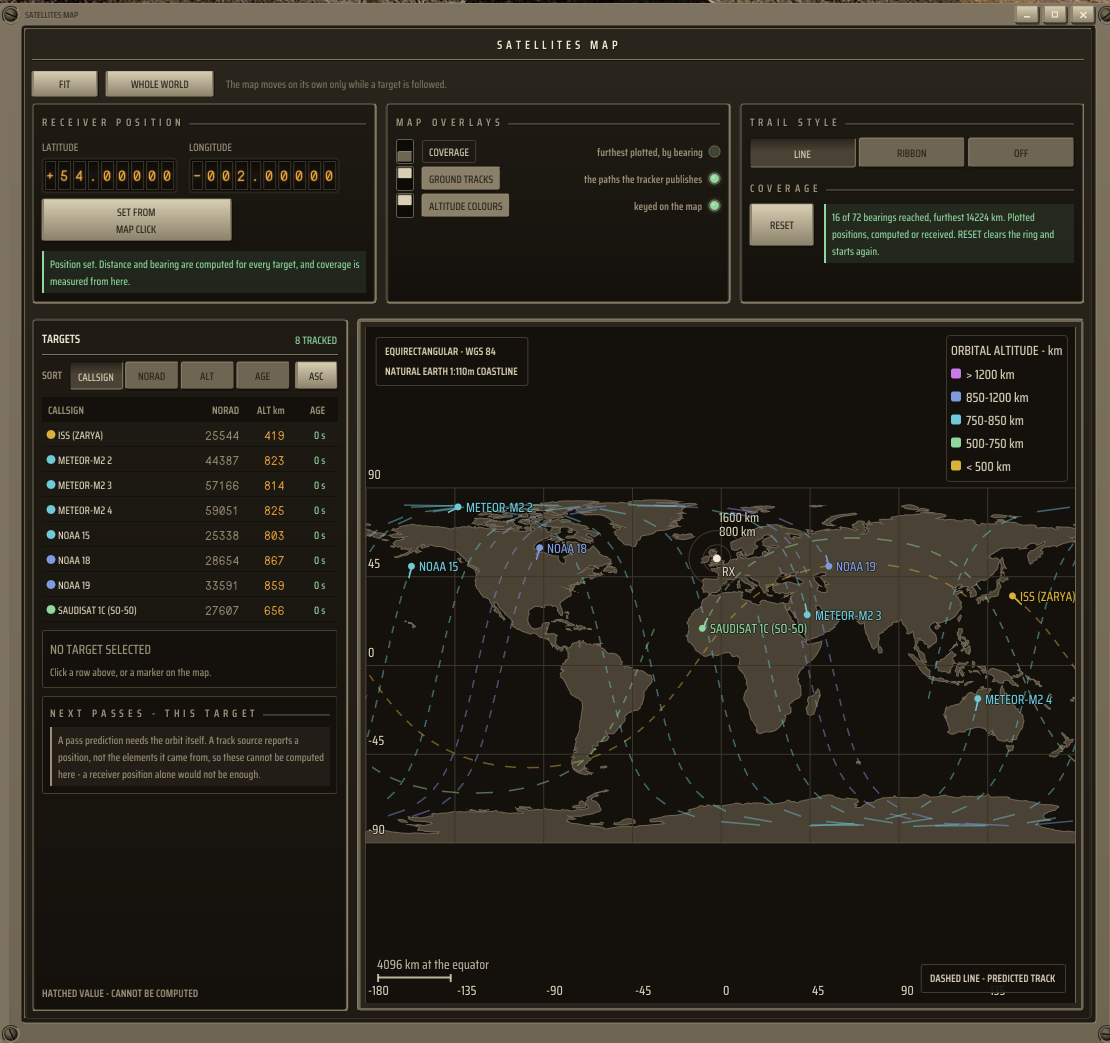
Satellites
Track source
The ISS, amateur birds and weather satellites drawn live on the map with their predicted ground track, a pass table for your own station, and Doppler correction that holds a moving downlink through a pass. Orbits come from CelesTrak element sets, so what it draws is computed rather than received.
Map Imagery (OpenStreetMap)
Map imagery
Street-level tiles under the map, fetched from a tile server you run yourself, which is what keeps the imagery licensing with whoever serves it.
Survey Engine
I/Q decoder
Point it at a band, leave it running on a machine that is on anyway, and come back to what was actually used: which frequencies, how wide, how strong they got and how often they were there. It reads the whole receiver bandwidth at once rather than one channel at a time.
Inmarsat-C / EGC Decoder
I/Q decoderexperimental
Maritime safety broadcasts. Roughly ten of its air-interface constants are reconstructed guesses, so it will most likely decode nothing off air — and it is published saying exactly that, in its own name.
Example RMS Reporter
Reference
The reference plugin: reports the RMS level of the demodulated audio, and exists to show what writing one looks like.
ACARS
Instrument decoder
The messages airliners and ground stations exchange over VHF — position reports, clearances, engine and maintenance traffic — printed as they arrive. The window is drawn as an airliner's cockpit printer, feeding paper.
FLEX Paging
Instrument decoder
FLEX pager traffic, held in a memory you can scroll back through rather than a log that scrolls away. The window is drawn as a 1990s pager, with a liquid-crystal display and a message memory.
Two-Tone Sequential Paging
Instrument decoder
The two-tone sequential pages that open a station's alerting: the tone pair identifies who is being called, and the receiver responds to it as the real equipment does. The window is drawn as a fire-station alert receiver.
VOR
Instrument decoder
The VHF omnidirectional range beacons aircraft navigate on. Turn the OBS and the needle answers, exactly as the instrument in the aeroplane does. The window is drawn as a cockpit course indicator, with a working OBS knob.
WEFAX
Instrument decoder
The weather charts broadcast to shipping, drawn as the fax machine that used to receive them would have drawn them, lamp ladder and all. The window is drawn as a marine fax machine's control panel.
406 MHz Distress Beacons
Instrument decoder
The 406 MHz beacons carried by aircraft, vessels and people. The window is an alarm panel because that is what the signal means. The window is drawn as an alarm panel, the fifteen-character identity on seven-segment glass.
ERT Utility Meters
Instrument decoder
The short bursts domestic electricity, gas and water meters send for drive-by reading, shown on a register like the one on the meter itself. The window is drawn as an electricity meter's register.
433 MHz Weather Sensors
Instrument decoder
The garden temperature and humidity sensors on 433 MHz, displayed on the kind of console they were sold with. The window is drawn as an Oregon Scientific console.
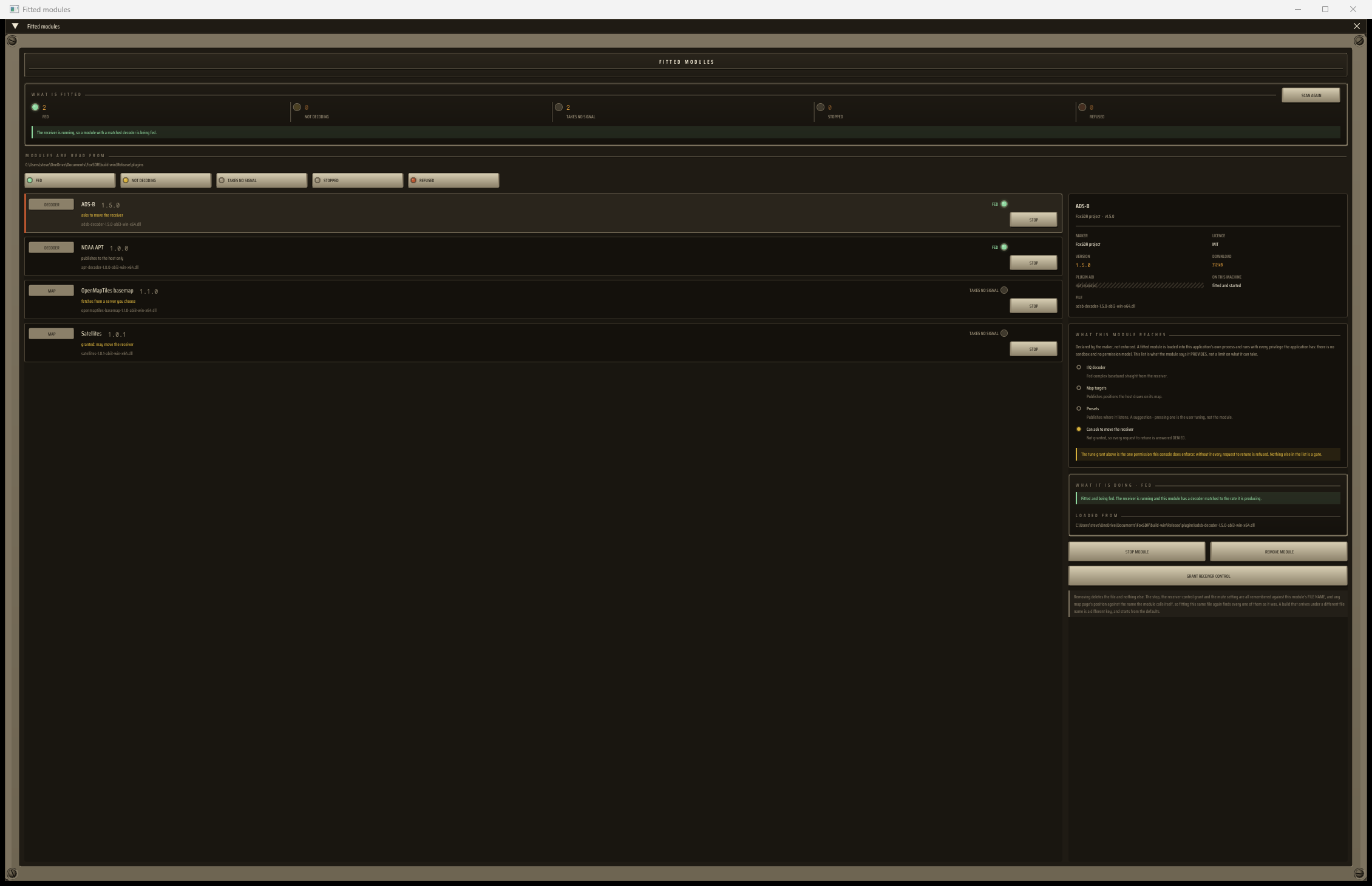
A fitted plugin runs inside FoxSDR's own
process, with every privilege FoxSDR has. There is no sandbox. Retuning is the one thing the
console actually gates: off by default, off for every newly installed plugin. Plugins are
ABI-exact — one built for a different host version is refused rather than loaded, because a
struct-layout difference becomes memory corruption days later.